The breeding centre will be built in Siruguppa in the Bellary district of the state in 1000 hectares of land bought by the state’s forest department from local farmers.
Ground Tales Staff
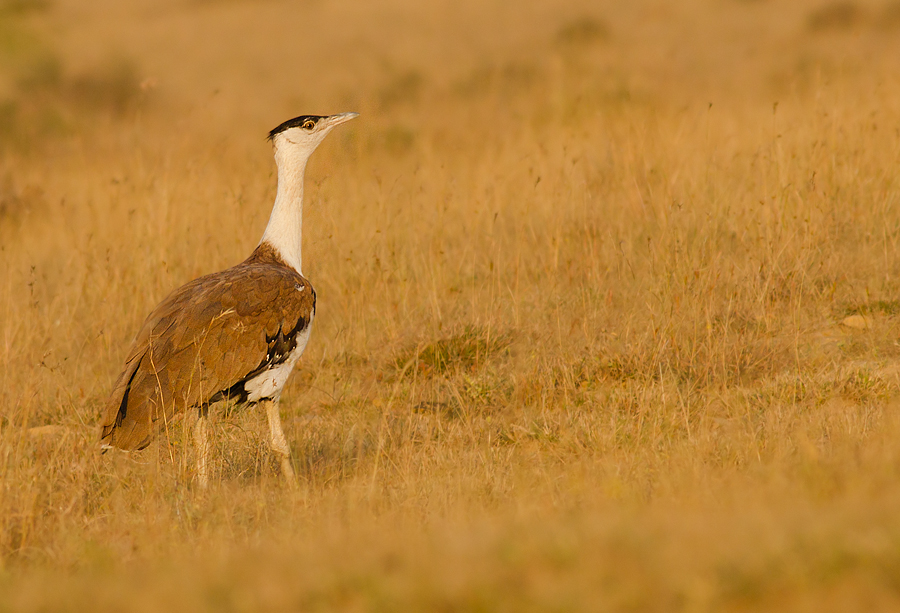
Photo credit – Prajwalkm (https://commons.wikimedia.org/wiki/File:Great_Indian_bustard.jpg#/media/File:Great_Indian_bustard.jpg)
The Karnataka government is taking special interest in conserving the population of the Great Indian Bustard, the heaviest bird of flight, endemic to the Indian Subcontinent.
The population of the GIB is dwindling at a very fast rate, due to loss of habitat in several states. The species is now on the verge of extinction with less than 150 individuals left in the wild since 2018, with more than 90% in Rajasthan, falling under the ‘critically endangered category’ in IUCN’s Red List.
This is the reason that the Karnataka Forest Department is planning to establish a new breeding centre in the state’s Siruguppa in Bellary district. Even the Karnataka Mining Environment Restoration Corporation (KMERC) has committed to conserving the GIB population in the state under a special project and has released a budget of Rs. 24 crores for restoring the population in 24 villages where the birds are being sighted.
According to reports, there are only six GIBs left in Karnataka, but since the species was found here in abundance until a few decades ago, the grasslands in the state can provide the right environment for the species to thrive, if efforts are put into conserving the grasslands and limit tree plantation and construction.
A study “The occupancy of Great Indian Bustard (Ardeotis nigriceps) using local people’s knowledge in the Deccan Plateau, Karnataka, India” published in the Biodiversitas Journal of Biological Diversity in March 2023 states that the GIBs were considered locally extinct in the state until the sightings in 2006 from Siruguppa taluk in Bellary district of the state.
Speaking to Deccan Herald, Arun S K, wildlife warden of Bellary said that the five-member committee looking over the breeding-centre project visited the GIB breeding centre in Rajasthan’s Desert National Park to study and understand the requirements of such a project.
They learnt about the types of grasses they needed to cultivate in the 1000 hectares of land that the KFD is planning to buy from the local farmers under the compensatory afforestation (CAMPA)scheme to establish the breeding centre. They also studied about kind of feed needed for omnivorous birds and their fledglings. Once the KDF has acquired the land, they will fence the area to minimise man-animal interaction and risk of predators.
Sutirtha Dutta, a scientist at the Wildlife Institute of India (WII) who is leading the GIB breeding project in DNP said while speaking to the media that while the GIB population in Karnataka is not enough to raise a captive founder population from the eggs collected from the wild, unlike DNP, if the KFD is able to secure around 300 sq km of contagious grassland habitats for the birds, they can release some captive-bred individuals in the state from Rajasthan with agreements between the two state governments and take steps to conserve the species.
 Ground Tales

Sounds promising attempt at the 30 by 30 needed for 2030
LikeLike