While the electricity from the solar mini-grid is helping some businesses thrive, high prices have deterred some from switching to renewable energy.
Shuchita Jha
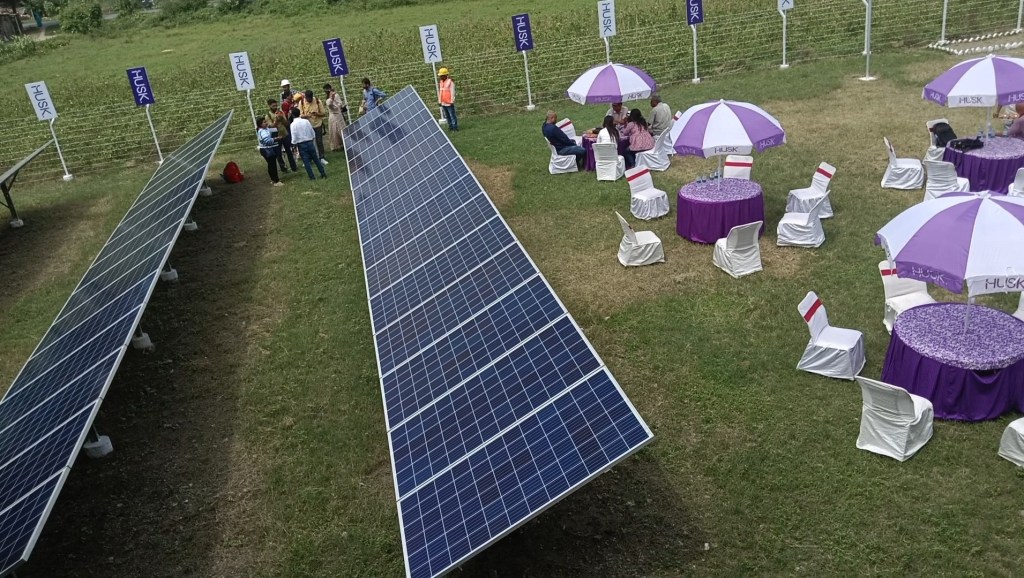
Husk Power System’s solar mini-grid in Jagannath Basant village in the Lalganj region in Patna, Bihar supplies electricty from renewable energy to local, small-scale businesses in the state capital. Photo by Shuchita Jha
Aman Kumar, 33, runs a digital printing press and happily pays a higher-than-average price for electricity to a private mini solar grid in the Jagannath Basant village in the Lalganj region in Patna, Bihar, along with his monthly bill for electricity from the Bihar State Electricity Board (BSEB).
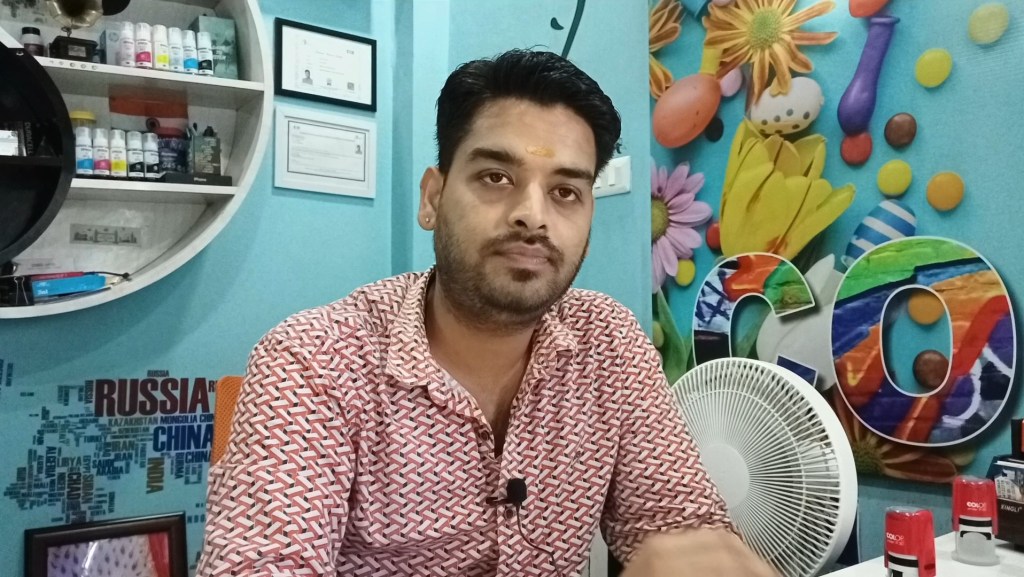
Aman Kumar, 33, runs a digital printing press and happily pays Rs 1,100 a month for electricity from Husk Power Systems mini solar grid in the Jagannath Basant village in the Lalganj region in Patna. Photo by Shuchita Jha.
Kumar pays Rs. 3,500 to 4,000 per month for the government power with which he runs two air conditioners, two large printers, two small printers, three computers, lights and fans. Despite paying a higher price for small usage, Kumar says that electricity from the solar grid helps him when there is a power failure in the conventional power supplied by the state electricity board.
“It has been a year since I started using Husk Power System’s basic electricity plan. Though I have two other sources, a battery and an electricity connection, I am happy to pay the extra amount of Rs 1,100 to Husk Power because when there is a power failure, I can still keep my printing press running and can recover the amount I pay to them within a day. It is like a back-up in time of crisis.” he says.
While Kumar’s focus is to keep the printing press running at all costs to maximize his profits, for 52-year-old Virendra Kumar Rai, electricity supply from the solar mini-grid energy means savings on diesel prices to keep his generator running. Rai who runs a welding shop in Patna also uses electricity from the solar mini-grid to repair tractor parts and other machines.
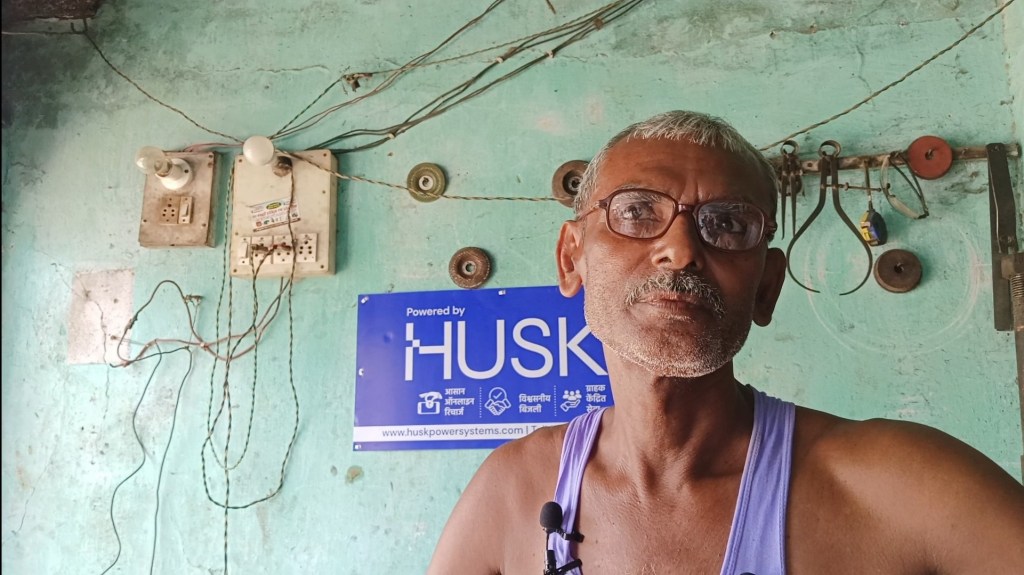
Virendra Kumar Rai, owner of a welding workshop has started saving Rs 5,000 per month on diesel cost to run the generator to run his machines since the time he opted for Husk Power’s electricity plan. Photo by Shuchita Jha
Rai who never even attempted to get an electricity connection from the BSEB says that since the procedure to apply for a connection from the BSEB is too complicated, and there is a lot of power cut and voltage fluctuations in the conventional supply, he decided not to get the connection and has relied on a diesel generator to run his business.
“Now that I have switched to a solar grid line, I have started saving around Rs. 5,000 per month on diesel. I get the electricity from the private solar plant for 11 hours per day (9 am to 8 pm), and if I have to get some extra work done at night, I use the generator,” he says.
Rizul Choudhury the marketing director of Husk Power System told Ground Tales that there are around 70 units of the company’s solar mini-grid operational in Bihar, with 30-kilowatt solar systems, enough to power small businesses.
“Our goal is to allow the local businesses to get uninterrupted power supply to MSMEs in the state so that their operations keep running smoothly. We also have deployed 90 units in Uttar Pradesh and hope to inspire people to switch to solar power as opposed to conventional to reduce carbon emissions,” he said.
However, the high prices do pinch the businessmen and they try to use the power from solar mini grid only when necessary. Some businesses have decided not to opt for it and face the challenges of power-cut instead in an attempt to keep their expenditure in check.
“I pay Rs 1,100 for the basic plan under which I use Husk’s power for a limited amount of time. Sometimes I don’t even need it and in those months, I wish the company would carry my leftover recharge and units left on the coming month’s bill because when I have to pay the additional amount without using the service, it does sting a little,” adds Kumar.
Rakesh Kumar, another businessman running an aluminium goods shop in the Lalganj market has not opted for electricity from the mini-solar grid, owing to its high prices. He does face a number of challenges when there is a power failure but decided to power though instead of taking upon himself an additional financial burden to keep the lights and fans running for a short period of time at escalated prices.
“While I get a monthly electricity bill of Rs 500 to 600, I manage fine with it. The basic plan of Husk starts at Rs 1,100 and that too for limited usage. Once you have finished it, you need to top it up. For a small businessman like me paying upwards of Rs 1,000 for electricity every month is not feasible as it is a recurring expenditure,” says Rakesh, wishing the company brings down the tariff to accommodate more businesses like his.
The story was published as part of Earth Journalism Network’s Renewable Energy Workshop in Patna, Bihar.
#REinIndia #RenewableEnergy #Solar
 Ground Tales