
By Team Ground Tales
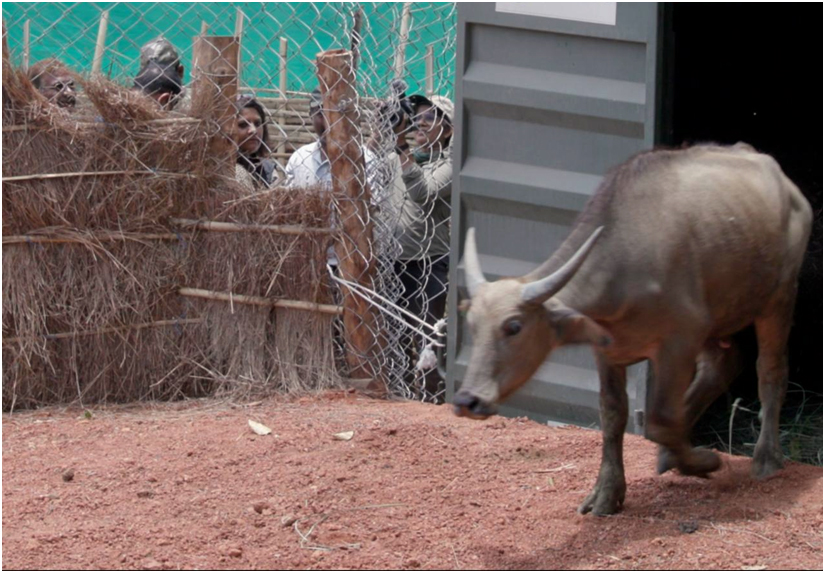
After nearly a hundred years of local extinction, the rhythmic thud of wild water buffalo hooves has returned to the tall grasslands of Central India. On May 9, 2026, the Madhya Pradesh Forest Department successfully completed the second phase of a landmark reintroduction project at Kanha Tiger Reserve, releasing four additional buffaloes (Bubalus arnee) into a specialized enclosure in the Supkhar range. This arrival brings the total founder population to eight, marking a decisive shift from species recovery to ecological resilience.
The relocation is a centerpiece of a multi-phased state strategy to restore a mega-herbivore that once roamed these meadows until the early 20th century. While the current batch strengthens the initial group released by Chief Minister Dr. Mohan Yadav on April 28, the long-term vision is far more ambitious, aiming for a self-sustaining population of 50 individuals within the year.
The 2,200-Kilometer Conservation Odyssey
Moving these endangered giants from the floodplains of Assam’s Kaziranga Tiger Reserve to the heart of Madhya Pradesh was an operation of unprecedented scale. The 2,220-kilometer road journey spanned 72 hours, involving specialized wildlife transport vehicles and a constant veterinary escort to monitor stress and hydration. According to field reports from the Wildlife Trust of India (WTI), the first seven sub-adults were captured between March and April using chemical immobilization and housed in “Bomas” (specialized enclosures) to habituate them to human caretakers and transit equipment before the grueling trek.
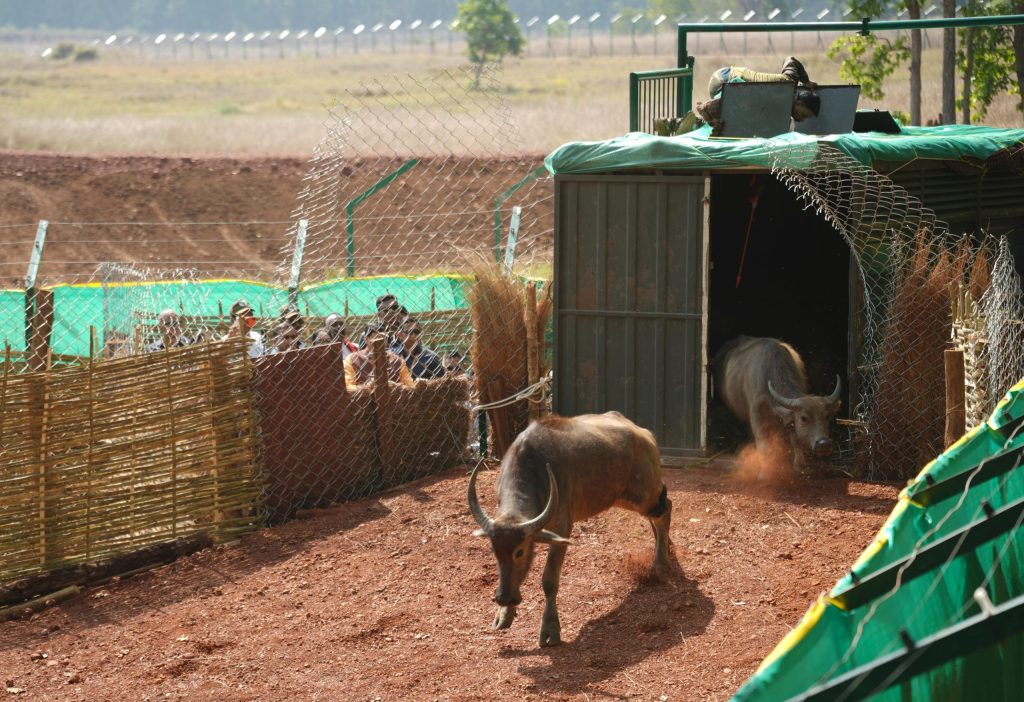
One of the individuals in the first batch was a hand-raised female calf from WTI’s rehabilitation center in Kaziranga, symbolizing the deep collaborative effort between state departments and scientific NGOs. Principal Chief Conservator of Forests Samita Rajora noted that the phased approach, moving small groups of four to six at a time, allows experts to monitor real-time adaptation and fine-tune protocols for the remaining 42 buffaloes scheduled for transport.
Why Kanha? Science Behind the Homecoming
The selection of the Supkhar and Topla regions was not based on historical sentiment alone but on rigorous ecological modeling. A habitat suitability study by the Wildlife Institute of India (WII) identified $390\text{ km}^2$ of low-lying grasslands in Kanha as the most viable site for the species’ return. Research published in the journal Restoration Ecology highlights that Kanha’s moist grasslands, particularly in the Halon Valley, offer the high forage biomass and perennial water sources necessary to sustain a population that could eventually grow to 200 individuals.
Genetic analysis conducted by Jayanta K. Bora and a team of researchers further validated this translocation, revealing that the wild buffalo populations of Northeast and Central India share a close maternal lineage that diverged roughly 140,000 years ago. This genetic affinity makes Kaziranga an ideal source for founders, as the original Central Indian stock has dwindled to fewer than 50 individuals in Chhattisgarh, rendering them too vulnerable to be used as a founding population.
A Legacy of Recovery and Resilience
The reintroduction at Kanha draws significant institutional confidence from over 15 years of intensive recovery efforts in neighboring Chhattisgarh. Since 2005, the Wildlife Trust of India (WTI) and the Chhattisgarh Forest Department have pioneered a multi-pronged approach in the Udanti Wildlife Sanctuary, which saw the local population grow from a precarious seven individuals to a peak of 11 during the project period. This project provided the blueprint for modern rewilding, combining in-situ breeding of a lone surviving female, “Asha,” with aggressive habitat restoration, including the clearing of over 2,000 hectares of invasive weeds.
Furthermore, the “Central India Wild Buffalo Recovery Project” established critical protocols for managing the wildlife-livestock interface. To protect the genetic integrity and health of the wild herds, authorities successfully implemented a unique “buy-back” scheme, replacing over 150 domestic buffaloes in peripheral villages with cows to eliminate the risk of interbreeding and disease transmission. These lessons in community participation—turning local hunting tribes into trained monitoring squads—now serve as the operational standard for the Kanha reintroduction.
Rewilding as a Nature-Based Solution
Beyond the prestige of the species’ return, the wild buffalo acts as a vital “ecosystem engineer” for Kanha’s biodiversity. Conservation experts explain that as unselective bulk grazers, these animals naturally control the growth of tall, coarse grasses. Their wallowing behavior creates seasonal wetlands and microhabitats that benefit amphibians and insects, while simultaneously maintaining the “grazing lawns” required by the hard-ground Barasingha, the flagship species Kanha famously saved from extinction decades ago.
The reintroduction also serves as a biological insurance policy. With 99% of the world’s 4,000 remaining Asiatic wild water buffaloes concentrated in Assam, the species is highly susceptible to localized epidemics or floods. Prof. Qamar Qureshi, Senior Advisor at WTI, emphasized that this project reduces that vulnerability by restoring the species to its ancestral range, providing the genetic and ecological resilience needed for long-term survival.
A New Era of Interstate Cooperation
The project is framed within a broader, reciprocal wildlife exchange agreement between Madhya Pradesh and Assam. Under this pact, finalized between Chief Ministers Dr. Mohan Yadav and Himanta Biswa Sarma, Madhya Pradesh will receive the 50-strong buffalo founder population and two pairs of Greater One-horned Rhinoceros for Bhopal’s Van Vihar National Park. In return, Madhya Pradesh is set to provide Assam with three tigers and six crocodiles, marking a new chapter in interstate conservation synergy.
As the buffaloes undergo their “soft release” period in predator-proof bomas within the Supkhar range, the Madhya Pradesh Forest Department is simultaneously working on human resource development and community outreach. Officials state that this rewilding effort is not just about a single species, but about proving that megafauna can recover in populated landscapes if optimal natural areas are protected and scientifically managed.

