
For over a decade, the farmers of rural Baramati noticed a quiet crisis unfolding beneath their feet. The soil was turning brick-hard. While intensive chemical fertilizer usage had maintained crop yields for a time, the ground was losing its natural resilience, becoming compact, and failing to retain moisture.
Today, a growing number of villages in the region are reversing this degradation. Under a community-led initiative called the Khet Bachao Abhiyan (Save the Farm Campaign), local cultivators are replacing synthetic inputs entirely with a traditional, microbial formulation known as Jeevamrut.
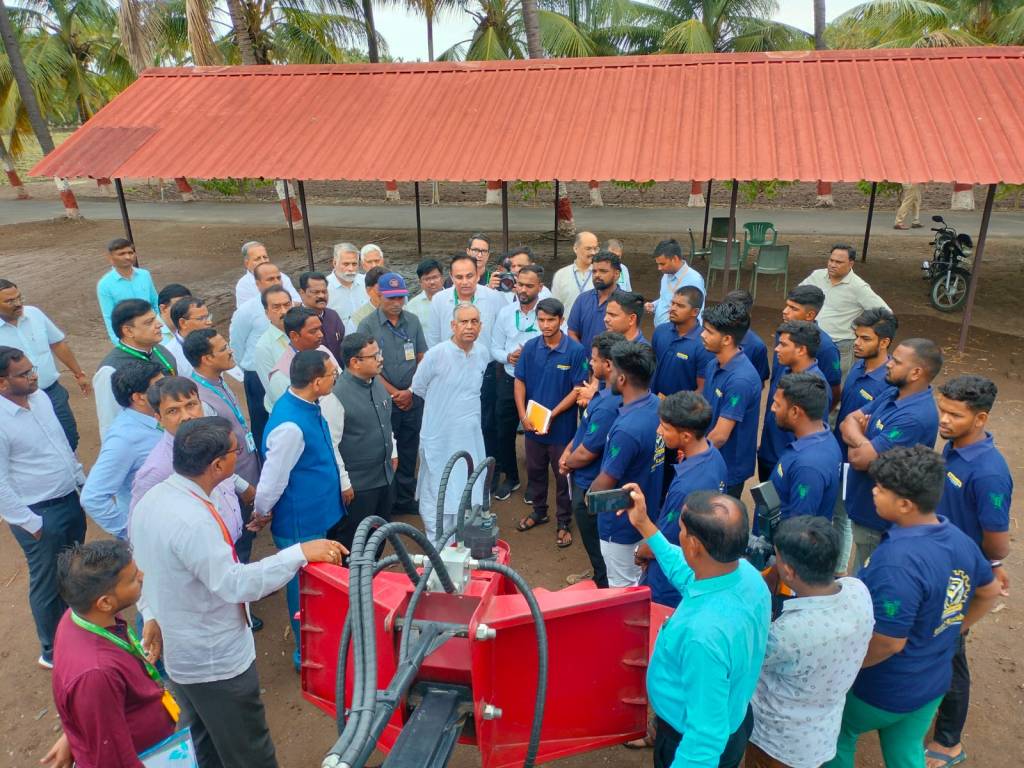
The shift has drawn national scientific attention. Over the weekend, senior officials from the Indian Council of Agricultural Research (ICAR-ATARI) visited these villages to conduct field inspections and distribute updated Soil Health Cards to track the progress.
The lab results on the cards match what farmers are seeing in the mud: organic carbon levels are rising, chemical toxicity is dropping, and the soil ecosystem is stabilizing.
The Low-Cost Science of ‘Jeevamrut’
Unlike commercial inputs, Jeevamrut is a microbial culture prepared directly on the farm using local ingredients. The recipe relies on basic materials: cow dung, cow urine, jaggery, pulse flour (besan), and a handful of undisturbed soil from the farm boundary.
The mixture is left to ferment in large drums in the shade for 48 hours. The jaggery and flour act as a catalyst, feeding the beneficial bacteria present in the dung. When applied to the fields alongside irrigation water, this concentrated culture introduces millions of active microorganisms back into the depleted earth.
The Impact on the Ground
The primary indicator of recovery for these farmers is the return of earthworms. In chemically treated fields, earthworms burrow deep into the subsoil or die off. In the Jeevamrut-treated plots, the soil has softened enough for earthworms to resurface, naturally aerating the roots of the crops.
“The ground doesn’t require as much water as it used to,” says Ramesh Pawar, a local farmer who transitioned his two-acre plot last year. “When the soil was hard, the water would just run off or evaporate. Now, the soil acts like a sponge.”

