
Jai Prakash Narayan Bird Sanctuary, widely known as Surha Taal, in Uttar Pradesh’s Ballia district has been designated India’s 100th Ramsar site, bringing international recognition to a freshwater wetland that supports thousands of waterbirds, threatened wildlife and farming and fishing communities.
The wetland was designated under the Ramsar Convention on January 19, 2026. Its official Ramsar Information Sheet was published on June 4, identifying it as Ramsar Site no. 2595. The sanctuary covers an official area of 3,432 hectares and lies around 10 kilometres from Ballia town.
A wetland shaped by the Ganga
Surha Taal is located in the middle stretch of the Ganga river basin and was originally formed from an old meander of the river.
The wetland receives freshwater through three channels. Katahar Nullah, connected to the Ganga, provides the main inflow, while the Madha and Garaai channels also supply water.
Katahar Nullah is mostly dry during summer and carries a sluggish current in winter. During the monsoon, however, it can drain water from the lake or reverse its flow when the Ganga rises, carrying river water into the wetland.
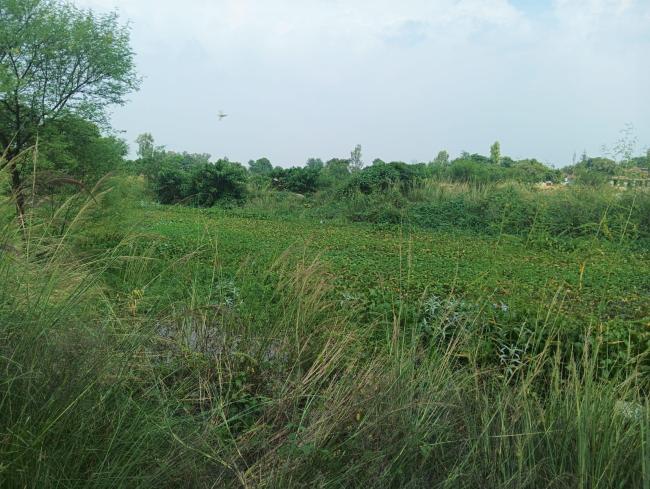
The Ramsar Information Sheet classifies Surha Taal as a permanent freshwater marsh. Its landscape includes open water, extensive marshes, seasonally inundated floodplains, aquatic vegetation, mudflats and agricultural fields.
Important refuge for migratory and resident birds
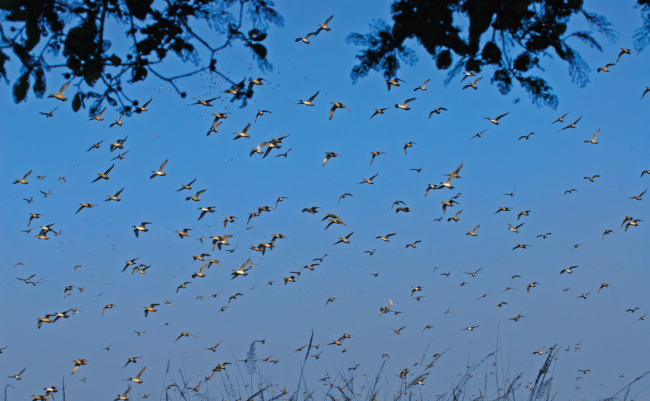
The wetland supports resident birds throughout the year and attracts migratory species travelling along the Central Asian Flyway during winter.
Its recorded birdlife includes bar-headed geese, northern pintails, northern shovelers, gadwalls, red-crested pochards, common pochards and common teals.
Surha Taal becomes especially important during summer, when many smaller wetlands in the surrounding region dry out. Its remaining water and marsh habitats provide resident waterbirds with feeding, nesting and roosting areas during periods of water scarcity.
The sanctuary supports 91 bird species, including 54 waterbird species. It also hosts 221 plant species, 66 fish species, seven mammal species and ten reptile and amphibian species.
More than 51,000 waterbirds recorded
Surha Taal qualifies as a Ramsar site under Criteria 2, 3, 4, 5 and 6, which recognise threatened species, biodiversity, support during critical life-cycle stages, large waterbird congregations and species occurring above one percent of their biogeographic populations.
The Ramsar document records an overall waterbird population of 51,083, based on data gathered between 2019 and 2023.
Four species were recorded in numbers exceeding one percent of their respective biogeographic populations:
- Red-crested pochard: 6,475 individuals, representing 6.4%
- Little egret: 8,529 individuals, representing 6.09%
- Common sandpiper: 1,027 individuals, representing 1.44%
- Ruddy shelduck: 624 individuals, representing 1.2%
The wetland has also been identified as an Important Bird Area because it supports threatened species and congregations of more than 20,000 waterbirds.
Bird counts show a sharp recent decline
Annual bird-count data included in the Ramsar Information Sheet shows that the number of birds recorded at the sanctuary has declined substantially in recent years.
The count rose from 59,846 birds in 2019–20 to 61,046 in 2020–21. It then fell to 58,340 in 2021–22, 45,045 in 2022–23 and 31,139 in 2023–24.
This represents a decline of nearly half from the highest count recorded during the five-year period. The Ramsar document does not identify the reasons behind the fall.
Habitat for threatened wildlife
The sanctuary supports several threatened species, including the endangered Indian softshell turtle.
Vulnerable species recorded at the wetland include the sarus crane, Indian river tern, common pochard, fishing cat and two fish species, Wallago attu and Bagarius bagarius.
The wetland’s deep-water areas, marshes and floodplain connectivity provide feeding, breeding and refuge habitats for fish. Their abundance also attracts fishing cats, which use the sanctuary as a feeding ground.
Farming and floating rice around the wetland
Agricultural land surrounds much of Surha Taal. Farmers grow paddy, maize, wheat, gram and groundnuts, linking the wetland closely to the local rural economy.
The exposed margins of the perennial wetland are also used to cultivate floating or deep-water rice. This variety adapts to rising water levels by extending its stalks above the surface.
The sanctuary includes 132.78 hectares of gram samaj land and 3,300.15 hectares of private land. The Ramsar document says the process of settling land and resource-use rights within the sanctuary is still underway.
Fishing and invasive plants among key pressures
Fishing and harvesting of aquatic resources are identified as threats of medium intensity within the wetland. Management measures include seasonal controls and restrictions on destructive fishing practices, particularly during breeding and low-water periods.
Invasive vegetation is another concern. Water hyacinth is described as the dominant weed in and around the wetland. The Ramsar document also identifies Prosopis juliflora as an invasive plant causing major impacts.
Other pressures include agricultural runoff, drainage, tourism, human disturbance, fires, storms and flooding. Most are classified as low-impact threats.
Management plan exists, restoration plan under preparation
The sanctuary has a site-specific management plan, while a restoration plan is being prepared.
Monitoring of birds, water quality, plant communities and other animal groups has been proposed. Authorities also regulate tourism and human activity through controlled access, seasonal restrictions, patrolling and awareness programmes.
Surha Taal also has recreational importance. The sanctuary received 40,352 tourists and visitors during 2023–24.
Surha Taal was first declared a bird sanctuary by the Uttar Pradesh government in March 1991 and was later renamed Jai Prakash Narayan Bird Sanctuary. Its recognition as India’s 100th Ramsar site highlights its international ecological importance, while its falling bird counts, fishing pressure, invasive vegetation and unresolved land rights point to the conservation challenges ahead.
- The Return of Earthworms: How Maharashtra’s Khet Bachao Abhiyan Is Healing Dead Soils
- India’s 100th Ramsar site: Uttar Pradesh’s Surha Taal gains international wetland status
- Are Herbal Cigarettes Really Safe? New Study Reveals Risks
- Inside the High-Stakes Rewilding of Kanha’s ‘Ecosystem Engineers’
- Environment experts write to MoEFCC to call off the Green Credit Program

