Are Herbal Cigarettes Really Safe? New Study Reveals Risks
3–4 minutes
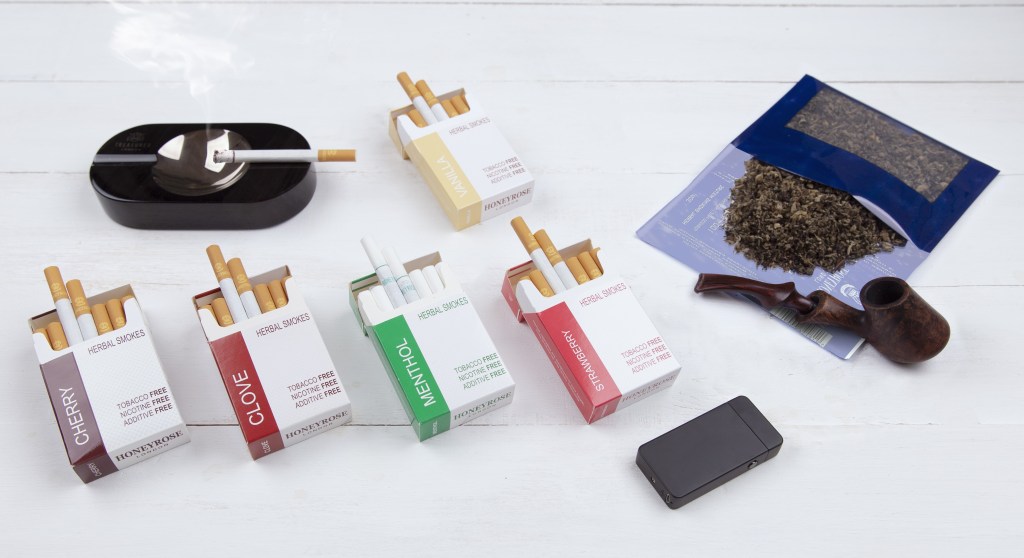
Consumers reaching for herbal cigarettes as a “healthy” or natural alternative to smoking may be exposing themselves to equal or greater harm than traditional tobacco users, according to a groundbreaking new international study.
The research, jointly conducted by the Indian Institute of Technology Gandhinagar (IITGN) and the University of Illinois Urbana-Champaign (UIUC), reveals that combustion of herbal smoking products generates emissions heavily laden with fine particles, toxic metals, and high biological reactivity.
Published in the Journal of Hazardous Materials, the study comprehensively analyzed firsthand smoke from two of India’s top-selling tobacco brands alongside four popular herbal varieties. These non-tobacco alternatives use mixtures of basil, clove, cinnamon, mint, green tea, water lily, and chamomile, frequently marketed under wellness banners.
The Illusion of “Natural” Safety
To test the health impacts, researchers utilized a sealed, automated two-chamber system calibrated to mimic human inhalation. The emissions were captured on filters and analyzed for their physical and chemical makeup.
The results showed that herbal cigarette smoke contained roughly 20% higher concentrations of sub-500-nanometer particles than traditional tobacco smoke. These ultrafine particles are known to penetrate deep into the lungs and are heavily linked to cardiovascular and respiratory diseases.
“Our findings challenge the widely held belief that tobacco-free means risk-free,” said Prof Sameer Patel, an Assistant Professor at IITGN’s Department of Civil Engineering and Chemical Engineering, and co-coordinator of Dr Kiran C Patel Centre for Sustainable Development. “Emissions from herbal cigarettes are comparable to or exceeded those from tobacco cigarettes on nearly every metric we measured. Leaf-wrapped herbal variants turned out to be the most hazardous of all the samples tested.”
The team also measured the oxidative potential (OP) of the smoke—a proxy for toxicity that gauges the smoke’s ability to create aggressive, inflammation-causing molecules in the body. The particulate matter from herbal cigarettes demonstrated a significantly higher OP than that of tobacco.
The wrapper material played a major role in these toxicity levels. Herbal products wrapped in tendu (ebony) leaves—the same leaves used to roll traditional Indian bidis—showed an oxidative potential nearly 49% higher than paper-wrapped versions.
Even more striking, chemical analysis revealed that one specific herbal brand filled with basil contained the highest lead concentration of any product tested, directly contradicting its marketing as a “chemical-free” lifestyle choice.
“That finding is important because many consumers associate nicotine-free products with reduced harm,” noted Prof Vishal Verma, research collaborator and an Associate Professor of Environmental Engineering in the Department of Civil and Environmental Engineering at UIUC.
“Combustion, fine particles, soot, trace metals, and the wrapper around them all matter more than what is written on the box,” said Dr P S Ganesh Subramanian, currently a postdoctoral researcher at Washington University in St. Louis, USA.
The findings expose a critical gap in public health legislation. Under India’s Cigarettes and Other Tobacco Products Act of 2003 (COTPA), tobacco products face strict public smoking bans, advertising restrictions, and mandatory warning labels. However, because herbal cigarettes contain zero tobacco, they largely escape these regulatory frameworks—a legal loophole mirrored in many countries worldwide.
This lack of oversight allows manufacturers to freely market these products with therapeutic claims, suggesting they can ease anxiety, improve sleep, or cure coughs.
According to the study’s lead author, Dr Alok Kumar Thakur, who completed his PhD at IITGN as a Prime Minister Research Fellow and is currently a postdoctoral researcher at Colorado State University:
“However, there is limited scientific evidence evaluating the emissions and toxicological impacts of these products.”
While the researchers stress that their laboratory findings measure the biological reactivity of smoke rather than making direct epidemiological claims about disease rates, the data sends a clear warning. As the herbal cigarette market continues to expand—often using wellness-oriented language that appeals to younger demographics and first-time smokers—public health experts are urging lawmakers to bring all combustible smoking products under strict regulatory control.